| Status: | Active, open to new members |
| Group email: | Wine Appreciation group |
| When: | Monthly on Wednesday evenings 7:00 pm-9:00 pm 2 blocks of 4 meeting on 3rd Wednesday of the month |
| Venue: | Market House - Castle Cary |
| Cost: | £40.00 per block |

Exploring Wine:
Join us for informal evenings of wine appreciation, where together we can enjoy sampling wines from around the world. Our aim is to trial some of the wonderful varieties and blends, now widely available. Thereby broadening our views of what constitutes a good glass of wine.
As well as exploring established favourites, we often like to try a ‘wild-card wine’ as well the more unusual (e.g. Hika Txakoli - a Basque wine made from a very rare grape called Hondarrabi Zuri, with its zesty essence).
A time for everyone to share their knowledge and experience of wine.
Cost: £40.00 for 4 sessions, which includes wine and nibbles.
Session 1 - September, October, November, December
Session 2 - February, March, April, May, June
Calendar Dates 2025 - 2026
Block One
- 17th September 2025
- 15th October 2025
- 12th November 2025
- 10th Decenber 2025
Block Two
- 18th February 2026
- 18th March 2026
- 15th April 2026
- 13th May 2026
Let's Talk Rose' Wine
Rosé sits between red and white wine. It is produced when the skins of red grapes touch the wine for only a short time, and whereas some red wines ferment for weeks at a time on red grape skins, rosé wines are stained, for sometimes just a few hours.
The winemaker has complete control over the colour of the wine and when the red grape skins are removed. This is done when the wine reaches the perfect colour, sometimes the palest blush, or sometimes a rich rose pink. There is a wide range of rosé wines produced from all over the globe. In France it is called Rosé, Rosato in Italy, and Rosado in Spain. Rosé from the U.S. is mostly produced from Primitivo grapes (Zinfandel) and can tend to be on the sweeter side.
Rosé wine can be made from pretty much any variety of grape varieties, including Grenache, Syrah, Cabernet Sauvignon, Tempranillo, Sangiovese, Malbec, Mourvèdre, Carignan, Primitivo, Cinsault, and Pinot Noir which are all common varieties used in its production and often blended. Each grape brings its own unique flavour profile to the wine. Flavour profiles of rosé include strawberry, honeydew melon, citrus zest or sometimes raspberry. The depth of colour is not necessarily an indication of the sweetness or dryness, but does offer an insight as to what you can expect from the flavour profile, giving a hint at what grapes were used in the process. The paler the colour, the closer towards a white wine the flavour will be, whereas the darker the colour the rosé’s may be fuller bodied and have greater red berry and earthy notes.
France, Italy and Spain are the top countries for producing rosé wines, with France having the highest consumption of it at 33% in contrast to the U.K. at 6% (source of data from the June 2024 report from www.rosewinesworldtracking.com)


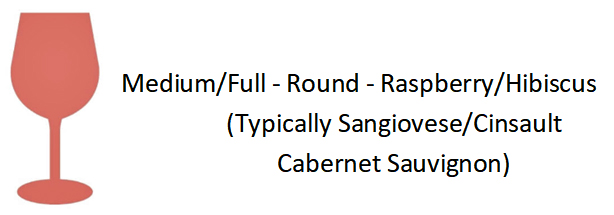

There are four methods for producing rosé wine:
Maceration: This is the most common method and involves crushing the grapes and allowing them to rest, or macerate, in their skins for a short period of time. Macerated rosé leans toward deeper hues and fuller-bodied rosé.
Saignée: The saignée method is less common and involves “bleeding off” a portion of red wine juice during the fermentation process and using it to make rosé wine.
Direct Press: This process drains the pressed juice off the skins pretty much immediately, resulting in a very light pink hue and brighter flavours.
Blending :This method is a literal blend of white and red wines and is most common in the production of rose champagne and rosé sparkling wine.